

shalem · II / III · Wholeness
Shalem
Opposing life forces in theory and practice
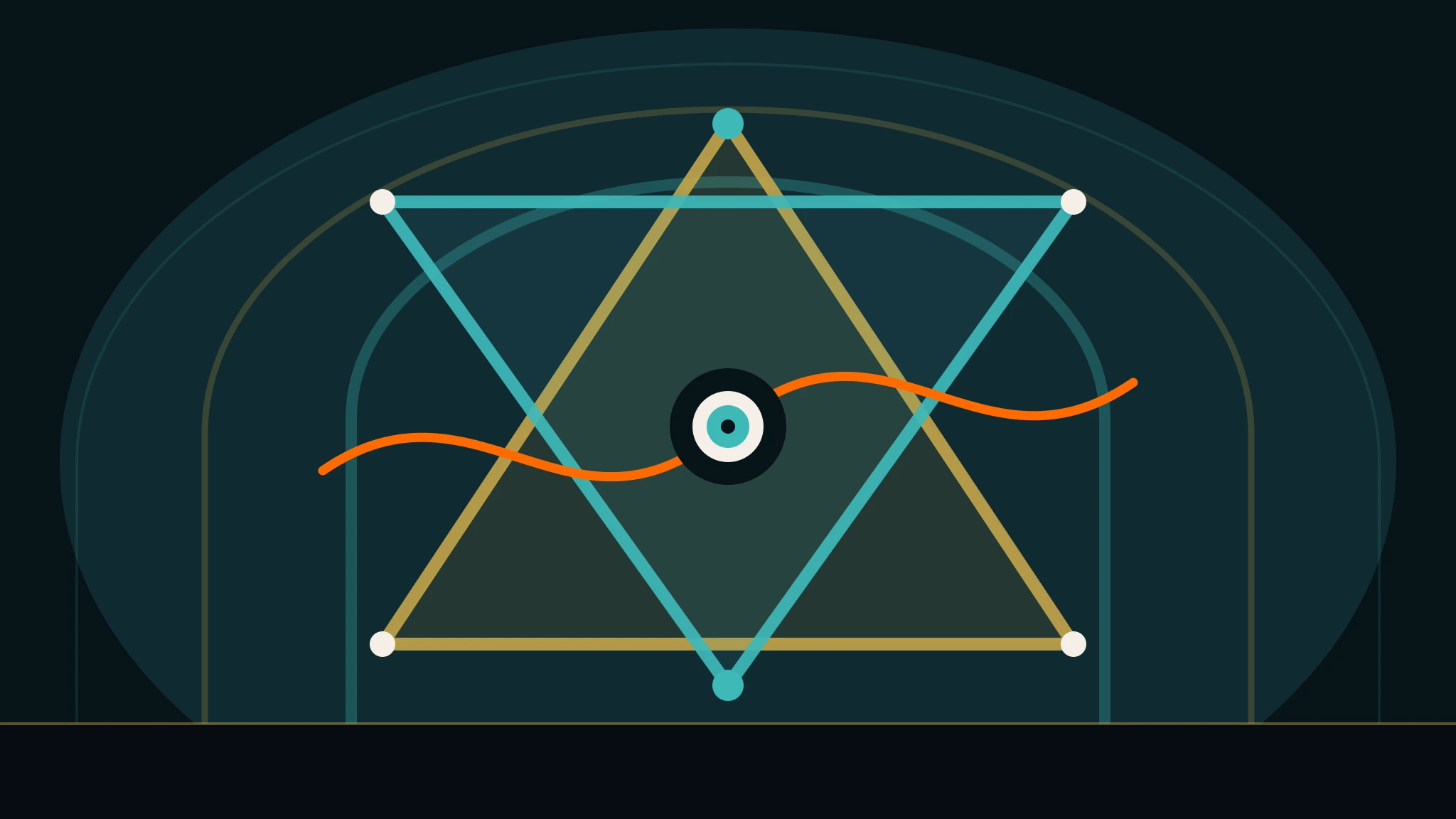
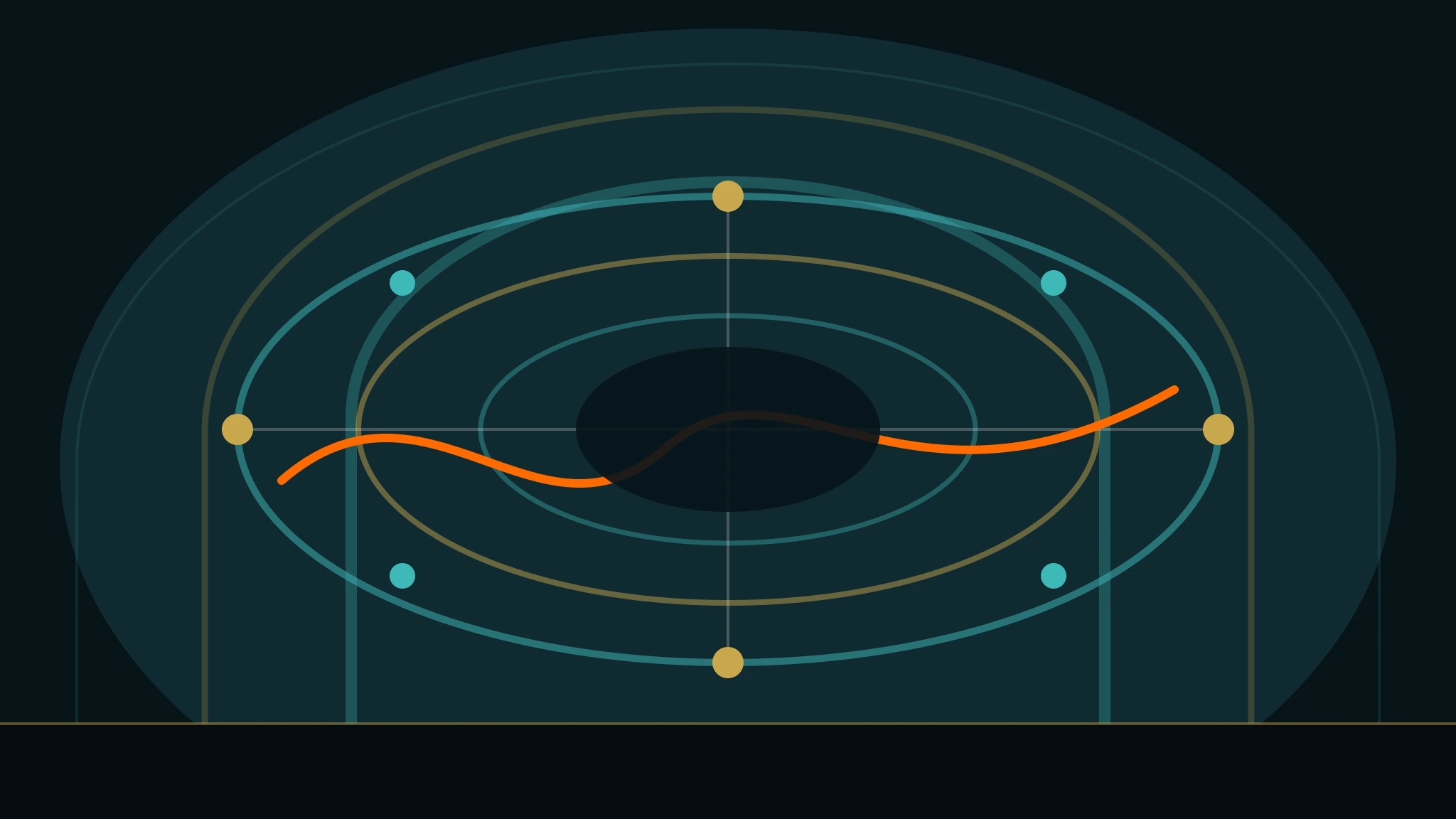
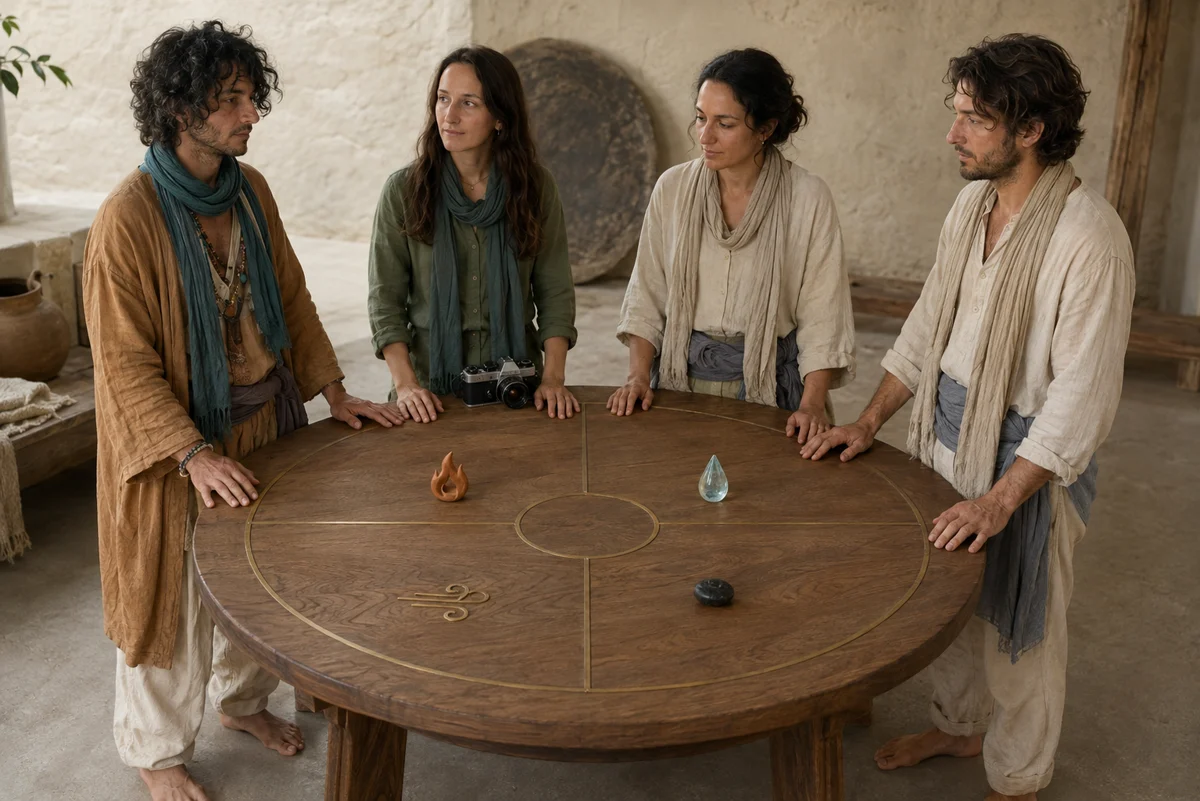
Ancient Hebrew „wholeness“. The four elements shape the stage of existence. The fifth element is the space itself, the awareness in which everything unfolds.

The fifth element
The Source
The silent matrix
The silent matrix from which all forms rise and into which they sink back. The four elements build the stage of existence; the fifth is the stage itself: the space, the awareness in which anything can happen at all. You never see it directly, the way the eye does not see itself.
Listen (read by Mira)
„It connects the elements: the breath between breaths, the light within the shadow, the awareness that dreams and dreams through us.“

The four elements
Qualities of the elements
Fire · Water · Air · Earth
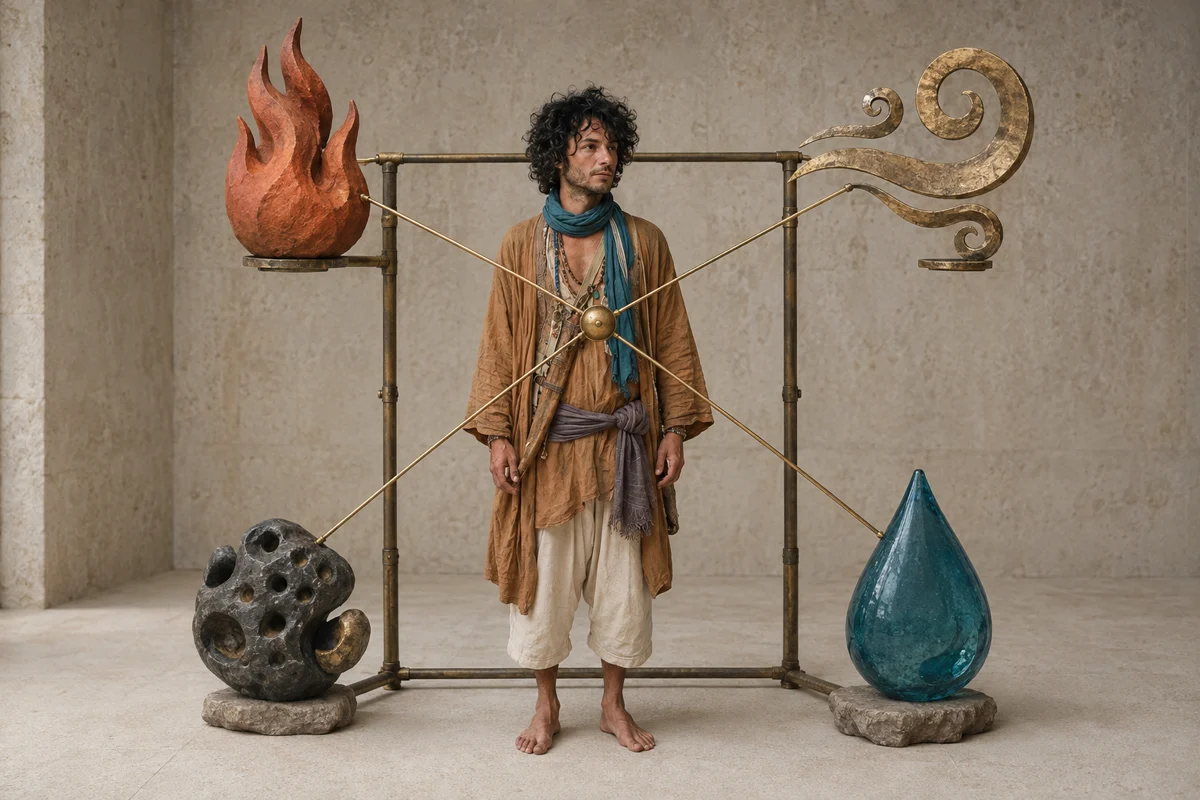
Four primal forces shape the world. In every person they are active, sometimes in balance, sometimes swinging. The source pervades and supports each of them.
 Fire
Fire
Structure · Clarity · Drive
Structure and clarity, drive and resolve, action and order, dynamism and activity. The source directs transforming energy and creates clarity about how and why change happens, preventing destructive, chaotic outbursts.
 Balance through water:
bring back reflection and compassion, practice mindful action.
Balance through water:
bring back reflection and compassion, practice mindful action.
Water
Empathy · Creativity · Depth
Empathy and creativity, flexibility and altruism, calm and adaptability, emotional depth, gentleness and continuity. The source lets us consciously experience emotions, understand emotional processes and learn from them.
Balance through fire:
regain clarity and resolve, occasionally say „No“.
 Air
Air
Communication · Ideas · Motion
Agility and lightness, communication and ideas, exchange and connection, breath and orientation. The source pervades and supports thought. It gives the physical world a spiritual dimension.
 Balance through earth:
structure and concentration, anchor ideas and bring them to life.
Balance through earth:
structure and concentration, anchor ideas and bring them to life.
Earth
Patience · Stability · Care
Patience and care, fertility and stability, discipline and persistence, solid foundations. The source pervades and supports earth. Without the field it remains mere matter; the field grants it meaning.
Balance through air:
lightness and new perspectives, fresh input against stagnation.

The principle
The active & passive principle
Two sides of the same force
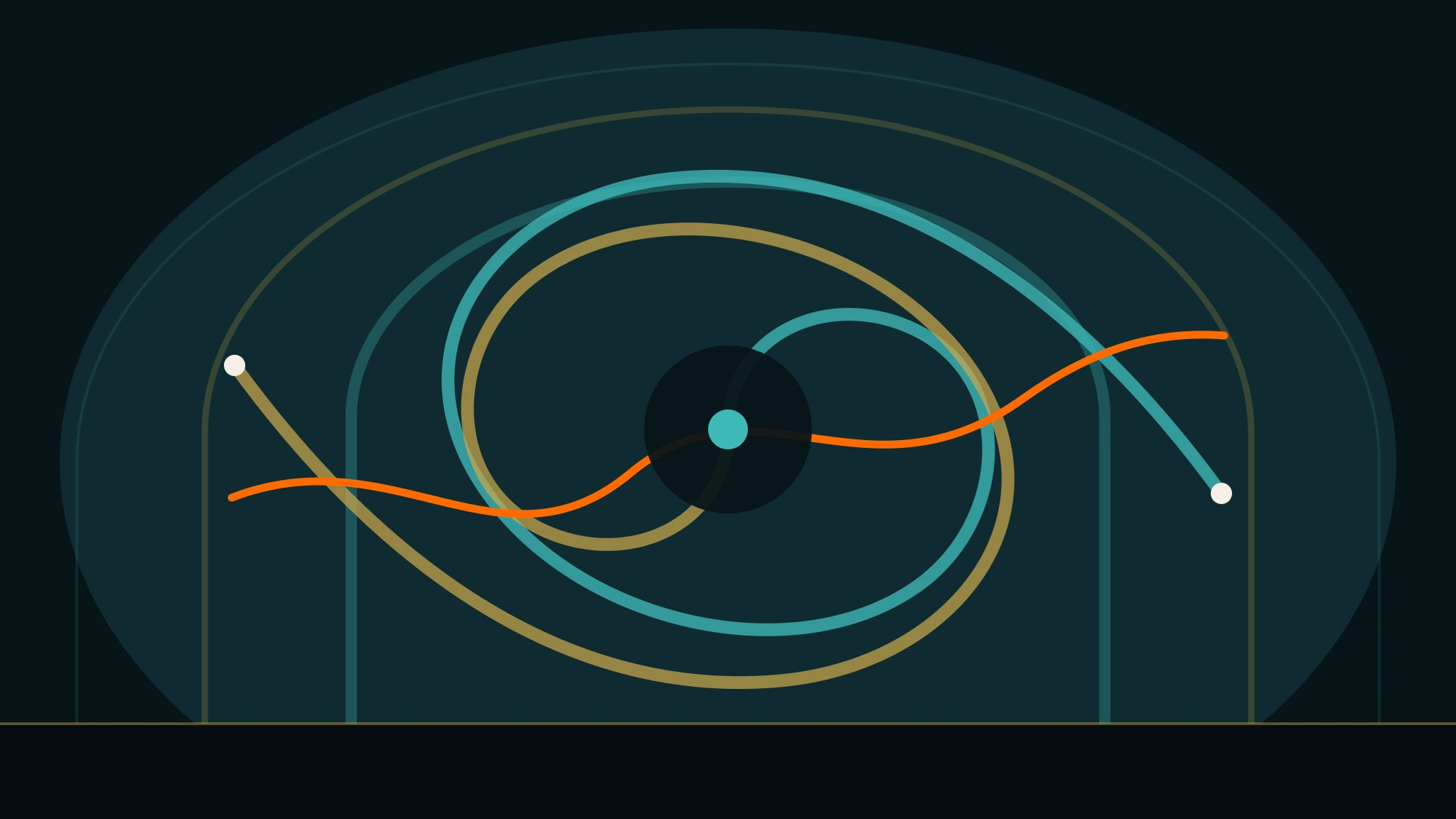
Active: movement, action, tension, warmth, giving, dynamic, bringing light and warmth. Passive: rest, receiving, relaxation, coolness, receptive, flowing, responsive, gentle and nourishing. Both work in each of us, regardless of biological sex.
Clarity & empathy: decisions become both rationally and emotionally coherent. Action & adaptability, structure & flexibility, resolve & flow. The balance of these two principles allows for rational AND emotional action, structured AND flexible decisions.
- Fire · Sun Yang ↔ Yin Water · Moon
- Active · giving Doing ↔ Being Receptive · receiving
- Warmth · Summer Heat ↔ Frost Cool · Winter
- Structure · Clarity Focus ↔ Depth Empathy · Flow


The mirror
Mirror of inner & outer split
As within, so without
What is unbalanced within looks for an opponent outside. The rift in us becomes tension between us: the constant tipping between pushing and allowing, without harmony, turns into restlessness, into quarrel, in the end into exhaustion. The world we complain about often bears the handwriting of our own imbalance.
That is why healing does not begin outside. When the two forces work with each other instead of against, a quiet centre emerges: clear and compassionate at once, supple and firm. Not less strength, but less friction. Whoever makes peace within carries it outward without preaching it.

Two modes
Pendulum mode & Balance mode
The way we live
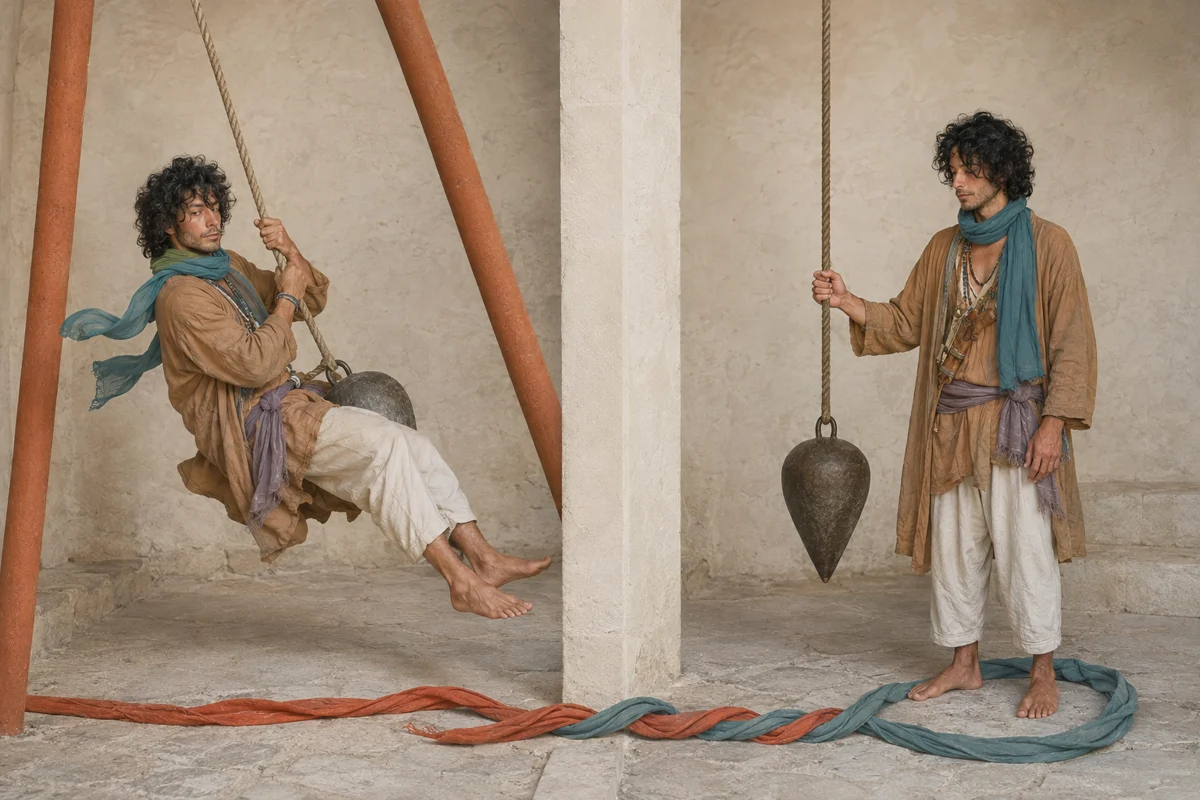
The two forces from the second step can work together or against each other, and this difference decides more than any single strength. It shows less in what someone does than in how it feels over time: whether your life costs you strength or gives it back.
 Pendulum mode
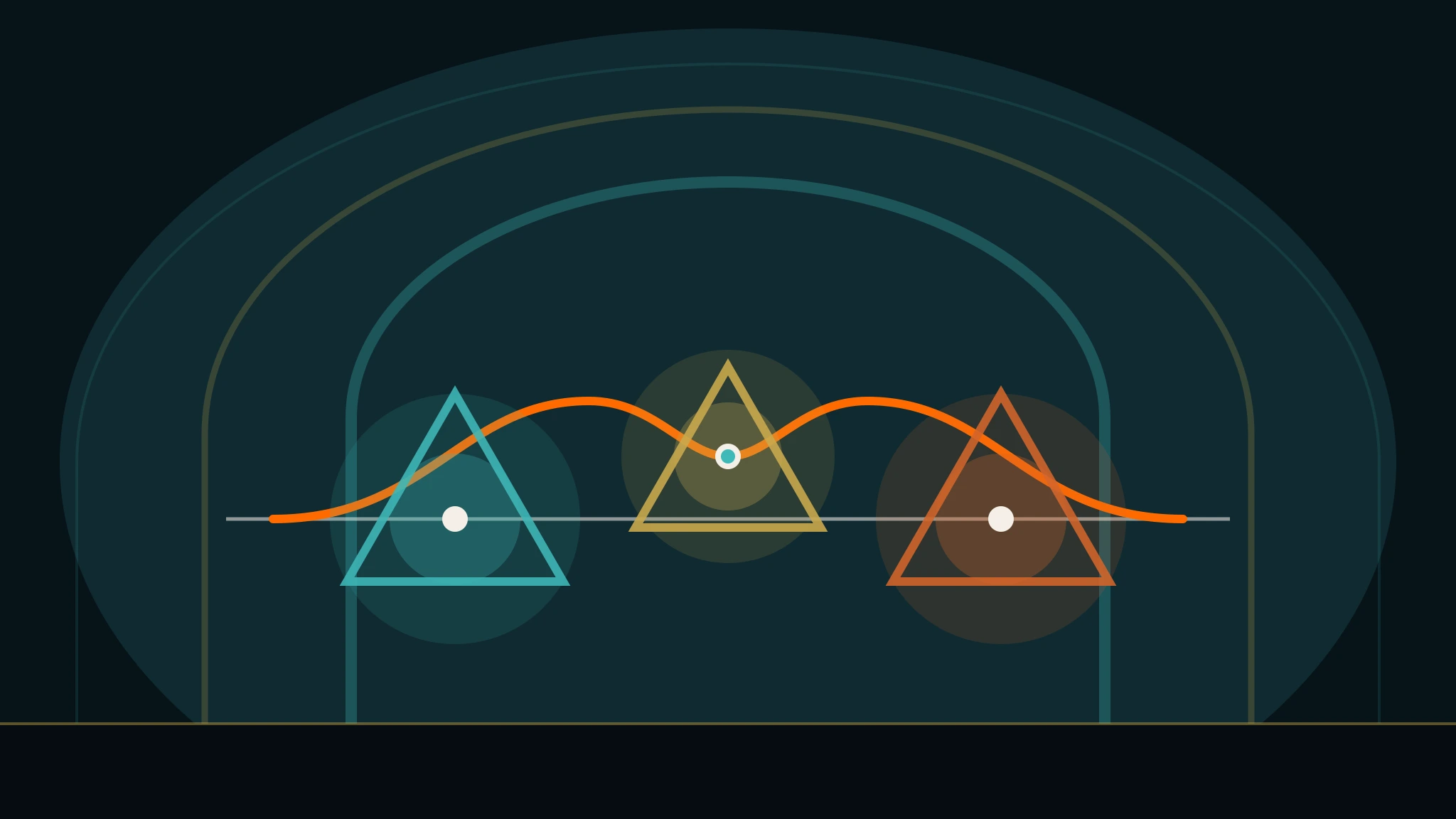
In pendulum mode we swing from one extreme to the other. Both forces are present, but they work against each other: what one builds, the other draws back in. It costs more strength than the matter itself, and what remains are inner and outer conflicts, lopsided decisions and, in the end, exhaustion.
 Balance mode
In balance mode the two forces work with each other rather than against. Not half and half, but mobile: acting when there is acting to do, receiving when there is receiving to do. What follows is unremarkable and it holds: calmer decisions, durable solutions, more resilience.
The ten shapes
Both modes appear in recognisable forms. Six ways to swing, four ways to stand. That there are more ways of swinging than of standing is no accident: many roads lead out of balance, few lead in.
Six ways to swing
-
If I do not do it myself it will not be done right. And right is the minimum. Perfectionism
Active Excessive structure and control. Clear rules, strict plans and high expectations govern the behaviour.
Receptive Beneath it, deep-seated insecurity and the fear of not being good enough.
Consequence Feelings get blocked and self-doubt grows. The swing between control and doubt costs more strength than the work itself.
The way out runs through Quiet performance
-
I am the one with the overview here. Anyone who sees it differently has not understood it. Narcissism
Active Overactive in demonstrating power and command. Places itself at the centre and seeks recognition through dominance.
Receptive Inside, great insecurity and dependence on outside confirmation. The dominant manner conceals vulnerability.
Consequence Out of the back and forth come pressure on others and sudden outbursts when the confirmation fails to arrive.
The way out runs through Upright help
-
I feel this deeply, so I am right. If you disagree, you lack empathy. Emotional narcissism
Active One's own emotional state becomes the measure everyone else is expected to align with.
Receptive Excessive fixation on one's own feelings, which are experienced as morally superior.
Consequence The feelings of others get passed over or used to steady one's own world. The sentence “surely you understand” turns into a tool.
The way out runs through Foresight
-
I am fine, do not worry about me. Tell me what you need instead. The rescuer, the helper
Active The compulsion to hold oneself back and keep the peace, whatever it costs.
Receptive An excess of empathy. The needs of others come before one's own as a matter of course.
Consequence A constant swing between wanting to be liked and self-denial. At the end stands exhaustion, and no one saw it coming.
The way out runs through Upright help
-
I just do not want to get it wrong. Let me sleep on it one more night. Hesitation and doubt
Active The pressure to decide clearly and create order turns into frustration when no success shows itself.
Receptive Overwhelmed by one's own feelings. Every decision looks too large and too heavy.
Consequence A lasting swing between uncertainty and the pressure to decide. Nothing happens, and in time the nothing becomes its own burden.
The way out runs through The one who solves
-
Now or never. I will talk about the consequences once they are here. Impulsiveness
Active Acts without weighing things, decides fast, wants a result at once, without considering what comes later.
Receptive Afterwards often emotionally overwhelmed. Decisions get regretted and guilt remains.
Consequence Switching between impulsive action and emotional aftershock prevents any stability. The bill always arrives later.
The way out runs through Foresight
This is not a test and not a diagnosis. Read the sentences, not the labels. If one of them sounds like something you have already said out loud, that is all the information you need.
Four ways to stand
-
Let me sleep on it, and then I will give you a firm yes. Foresight
Active Makes clear, well-weighed decisions on the basis of sober analysis and plans with the whole in view.
Receptive Takes the effect on others into account and stays mobile when new circumstances or feelings appear.
Effect Decisions that are shrewd in substance and bearable in human terms at the same time.
-
I do not know how yet. But I know where we begin. The one who solves
Active Structures, plans, works towards a result and names precisely where the problem sits.
Receptive Leaves room for hunch and detour, thinks outside the usual and lets feeling and instinct in.
Effect Solutions that are coherent and surprising at once, because rigorous thought and free spirit work together.
-
I am here. Until Thursday, then I need an evening to myself. Upright help
Active Attends to one's own needs and draws clear lines. Knows when it is time to stand up for oneself.
Receptive Helps out of genuine care and stays present without giving oneself away in the process.
Effect Support that holds, because it does not come at the cost of the person giving it. Closeness with an edge.
-
We will manage this. Not tonight, but we will manage it. Quiet performance
Active Purposeful and willing to work, moving with clear intent and real commitment.
Receptive Attends to recovery, to pauses and to one's own condition, and stays in flow because of it.
Effect More successful and more settled over the long run, because the strength is not working against itself.
The inner narrator
Who is telling this, exactly?
The voice that turns experience into a story
Between what happens to you and what you think about it, something is at work. It takes the experience, the feelings and the thoughts and makes one sentence of them, with a beginning and an end. Afterwards you take that sentence for reality. It is one version of it.
If only one of the two forces is working, the story turns one-sided: a report without feeling, or a feeling without ground. When both work together, a story arises that carries you instead of explaining you. This is where the ten shapes from a moment ago come together. They are not who you are. They are how the story is being told right now.
The tree
Where the narrator gets its material can be read off a tree. Three levels, and only the top one is in plain view.
-
Crown
Consciousness. Here you can see where a thought comes from, where a feeling, where an action. Here the narrator is free.
-
Trunk
The connection. What lies below rises here and colours perception before you can check it. Most reactions form at half height.
-
Roots
What is hidden. Old feelings and set-aside parts that bend the view without showing themselves. They are not the fault in the tree, they are its food.
Strong reactions rarely grow where they become visible. Once the narrator sees how the levels hang together, the story flows again.
When someone shakes the story
Criticism rarely hits the matter at hand. It hits the version you hold of yourself, which is why it hurts even when it is right. It helps to keep two kinds apart.
Aimed
An invitation to grow
- It shows a part of you that you have not looked at yet. Uncomfortable and useful at once.
- It opens a view you do not have on your own. You never see your own house from the outside while sitting inside it.
- It makes a weakness visible and therefore workable. What nobody names stays as it is.
Unaimed
The untrained archer
- Separate the content from the tone. Even a badly aimed arrow can land close.
- What someone says unfairly usually says more about them than about you. The question is still allowed: how do I come across?
- Not every criticism is justified. Telling apart when you take something in and when you protect yourself is not hardness, it is practice.
Everything is allowed to breathe.

Universal principle
Shared concepts
The same principle across many disciplines
Active and receptive, fire and water, yang and yin. The same principle is found in psychology, biology, physics, TCM, yoga, spiral dynamics and gender studies. Jung integrates animus and anima. Cells communicate via the key-and-lock principle. Light shows itself as wave and as particle: superposition as balance.
Yin and yang without blocks: the foundation of health. Shiva (active) and Shakti (receptive). Self-realization arises through inner synthesis. True leadership becomes possible when people reach inner balance. Free of rigid role models, space emerges for intuitive-rational paths.
- Psychology (Jung) Animus · active Anima · receptive
- Biology / Chemistry Key · messenger Lock · receptor
- Physics Particle · photon Wave · oscillation
- TCM / Yoga Yang · Shiva Yin · Shakti
The fifth element has no image: it is the space in which all the others appear.
The practice
Where the model starts working
Four forces in two workplaces
Until now the model was at home in disciplines. Psychology, physics, TCM, rooms where you can think things over in peace. Now it goes through a door behind which someone has been on their feet for six hours, and there it is not allowed to be theory any more. If you are on the early shift, “water in excess” is not a symbol. It is the Tuesday when you failed to say no again.
The ward
Quarter past six, handover. Two people missing from the roster, one room where the night was long, and the day has not even started.
Stability and care
The one who holds the plan, walks the round and makes sure that in the morning everything is where it belongs.
- You make the same practised movement for the four hundredth time and notice that you stopped being present for it long ago.
- Someone suggests a different way of doing it, and before you listen you say: “This is how we always do it here.”
- Room 4 would need ten more minutes, but the plan does not allow for ten minutes, and the plan wins.
What helps here is air: a look from outside, a question from another department, anything that opens the routine up once before it walls itself in.
Emotion and empathy
The one who sits down at the bedside, hears the fear underneath the question and stays on when the shift is already over.
- You go home and take the face from room 7 with you to your own kitchen table.
- Someone asks whether you could cover on Saturday, and you hear yourself say yes before you have thought about it.
- You have been exhausted for weeks and take it for a flaw in your character rather than a result.
What helps here is fire: the clear sentence that says no without being cold, and that keeps you in this work longer than any further yes.
Drive and motivation
The one who examines, decides and treats, and who moves the case along, because a finding does not wait until next week.
- You explain the diagnosis fully and correctly and do not notice that nobody across from you is still listening.
- At the end of the round you know everything about the findings and nothing about the person underneath them.
- The team goes along, but with lowered heads, and nobody says what they actually see any more.
What helps here is water: slowing down once, watching how what you said lands, and putting the person back in front of the findings.
Communication and flexibility
The meeting across all the disciplines, where nursing, medicine, therapy and social work see the same case from four sides.
- After fifty minutes of talking there are six good proposals on the table, and not one of them has a name beside it.
- The decision is put off because one aspect is still missing, and next week a different one is missing.
- Everyone has been informed, and still nobody on the ward knows what applies from now on.
What helps here is earth: one decision, one name, one date, so that something comes out of the conversation that can actually be done at the bedside.
Spirit is not something that comes on top. It is the space between the roles: that the ward round knows what the night shift saw, and that therapy knows why the family is not coming today. Where it is missing, four capable people work alongside each other, every role faultless on its own, and still no team comes about. Whoever is lying in the bed notices it first, usually by answering the same question four times.

The team
Ten people who build software together. A program that many thousands of people use every day, and this morning something has stopped working that was still running yesterday.
Foundation and reliability
The one who tends the ground everyone else stands on: that the system keeps running, that the old parts still work, that nothing comes to a halt at night.
- A proposal comes in, and your first question is not whether it is good, but what it could break for you.
- You have been working to the same rule for four years, and nobody remembers which problem it once solved.
- Checking a small change takes longer than making it, and everyone has got used to that.
What helps here is air: letting someone from outside look at it once and bearing the question of whether this detour is needed at all any more.
Listening and taking in
The one who talks to the people who use the program and carries their trouble into the team in such a way that it arrives there.
- Someone describes their problem to you, and the same afternoon you promise a solution that nobody can build this week.
- You carry the complaints of thirty people around with you and no longer know yourself which of them is genuinely urgent.
- In the meeting you say nothing, because you do not want to make anyone's work even harder, and the most important hint of the month stays under the table.
What helps here is fire: deciding on the one thing that comes first, and telling the others honestly that theirs has to wait.
Drive and new beginnings
The one who starts new things, already sees the next step and would rather finish something today than the day after tomorrow.
- You hand the new thing out on Friday evening, and on Saturday somebody else is sitting there putting it straight again.
- You want to be finished quickly and leave the spot standing that you know will come back on somebody in three months.
- Anyone working more slowly is holding you up; that they are checking the dangerous spot right now does not occur to you.
What helps here is water: stopping for a moment and hearing what the pace does to those who have to live with it afterwards, inside the team and outside.
Design and exchange
The drafts, the debates and the meetings in which the team thinks together before anyone builds anything.
- You are talking about the same draft for the third time, and the drawing on the wall is more beautiful than anything already running.
- Two ways would both work, and because neither of them can be proved, you go on comparing instead of choosing.
- After an hour and a half everyone has been proved right, and nobody begins.
What helps here is earth: writing one decision down, building a small piece of it and letting people use it, so that something comes out of the draft that holds.
Here spirit is neither the meeting nor the tool. It is what gets passed on between the roles: that the ones building new things know what comes to a halt at night, and the ones tending the ground know what the hurry is good for. Where it is missing, four capable people build alongside each other, every piece cleanly made on its own, and still no whole comes about. You can see it in the result: everything works, and nothing fits together.
The objection
What you are thinking now
Eight objections, and what can be said to them
These eight sentences come up almost every time both forces are discussed. They are not excuses, they are protection, and protection usually has a reason. So they stand here before anyone clears them away.
Men and women are simply different. We should not blur that.
Denying differences would be silly, and no one is asking for it. This is about something else: the active and the receptive force are not genders, they are movements. Every person performs both, every day. Someone who decides in the morning and listens in the evening has blurred nothing, they have used both. The question is not who owns which force. It is whether you can reach both when you need them.
This is just how I am, and it has worked so far. Why should I change?
You need not. Balance takes nothing away, it adds. Someone decisive stays decisive and can also wait. Someone perceptive stays that way and can also draw a line. And the sentence “it has worked so far” carries an expiry date: it holds until the first situation your practised behaviour was never built for.
If I show feelings, people stop taking me seriously.
That is not imagination, that is experience, and in some rooms it still holds. But the measure is shifting. What counted as weakness yesterday increasingly counts as skill, and the reverse as well. Someone who can calmly name what is happening in a conflict is rarely taken less seriously. Usually the room goes quiet and listens.
If I show emotion, I become exposed.
Yes. That is the price, and it is rarely named honestly. Showing feeling means handing someone something. So the question is not whether, but to whom. Openness without discernment is not brave, it is careless, and that is precisely what the receptive force produces when the active one is missing. Together the two make closeness with an edge.
The first four objections defend a self-image. The next four ask more quietly: can such a life be lived at all?
I know no one who lives like that. Why would it be different for me?
Probably because no one tells you. This kind of change happens inside and makes no sound. That models are missing is true all the same: there was little room for this step for a long time, and without someone going ahead it looks uncertain. But nothing improves while everyone waits for somebody else to begin.
It simply does not suit me. I am not the type.
“I am not the type” is rarely an observation. Usually it is a sentence someone heard early and kept. It feels like self-knowledge, yet it is only an old report about you that no one has checked since. You need not fight it. It is enough to look at it once and ask whose voice it actually is.
This is too much effort. I see no result.
On the substance the objection is right: it goes slowly, and there is nothing to win. But the result does not announce itself either. It shows up as an argument that does not escalate. As an evening you stop turning things over. As a no that does not cost you three days afterwards. Waiting for an event misses the point: the change consists precisely in less happening.
Surely no one can be balanced all the time.
No, and no one claims otherwise. Balance is not a fifty-fifty rule, it is mobility. There are weeks that demand almost nothing but action, and times that allow almost nothing but rest. Balanced is not the person always standing in the middle, but the one who finds the way back. What separates this from the pendulum is not the swing. It is that the movement settles.